
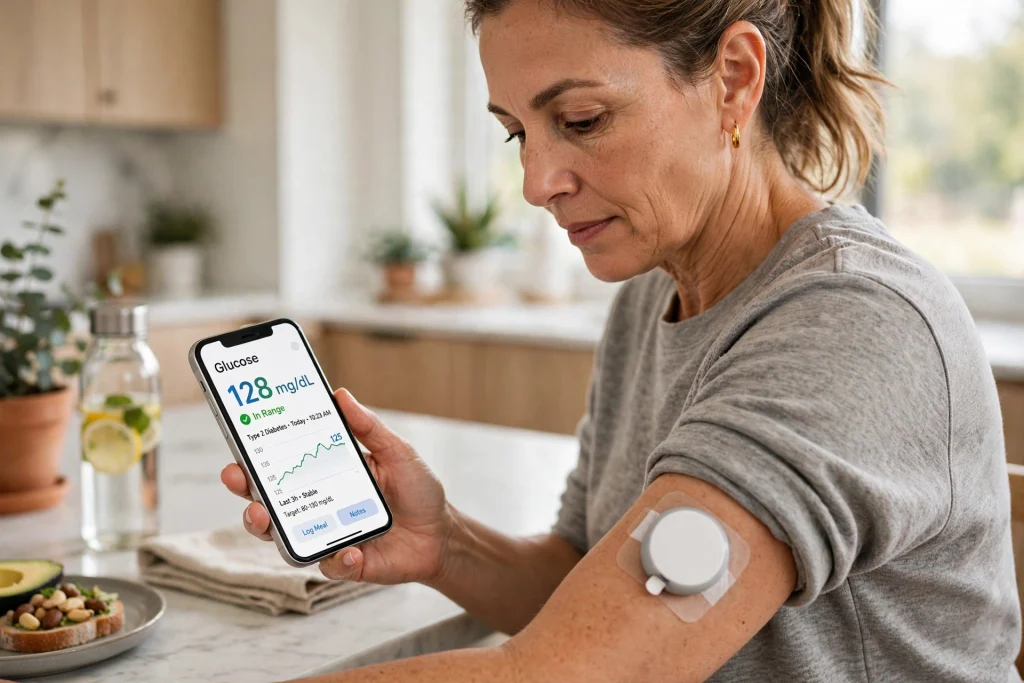
Continuous glucose monitors, the small wearable sensors long associated with insulin users, can significantly improve blood sugar control for adults with type 2 diabetes who do not use insulin, according to the largest clinical trial of its kind. Published in the New England Journal of Medicine and widely discussed this week, the study found that participants using the devices spent approximately five more hours each day within their target blood sugar range compared with those relying on conventional monitoring.
What the Trial Found
Researchers followed adults whose type 2 diabetes was managed with lifestyle measures and non-insulin medicines. Half were given continuous glucose monitors, which read glucose levels every few minutes through a sensor worn on the arm or abdomen, while the comparison group continued with standard care and finger-prick checks. Over the follow-up period, the monitor group not only spent more time in range, but also saw improvements in average glucose measures that doctors use to judge long-term control. Full details of the study are available through the New England Journal of Medicine.
Time in range has become an increasingly important measure in diabetes care because it captures the daily highs and lows that a single quarterly blood test can miss. Spending roughly five additional hours a day in range is, clinicians say, a meaningful difference: it means fewer prolonged spikes after meals and fewer dips that leave people feeling drained or unwell.
Why Real-Time Feedback Changes Behaviour
The technology appears to work less as a medical intervention in itself and more as a feedback loop. Seeing exactly how a particular breakfast, walk or late-night snack affects glucose within the hour helps people make small, repeatable adjustments. A short walk after lunch, a different order of foods on the plate, or an earlier dinner can show up on the graph the same day, reinforcing habits that would otherwise feel abstract.
That immediacy mirrors how people solve everyday problems in other parts of life, from learning new tools, as in our guide to handling an app that will not install, to building better routines step by step. In the trial, participants did not need intensive coaching to benefit; the data itself prompted many of the changes.
Who Could Benefit Most
Diabetes specialists say the findings could widen access to the devices, which insurers have historically reserved for people using insulin. Adults with type 2 diabetes who struggle to reach targets despite medication, who experience unpredictable readings, or who simply want a clearer picture of how food and activity affect them may gain the most. Guidance from the Centers for Disease Control and Prevention notes that about one in nine American adults lives with diabetes, and most have type 2, so even modest improvements at population scale could reduce complications over time.
There are caveats. Sensors cost money, require regular replacement, and generate a stream of data that some people find stressful rather than empowering. Skin irritation, alarm fatigue and the temptation to over-correct every small rise are real drawbacks, and the devices do not replace medicines, regular check-ups or advice from a care team.
Participants and clinicians also reported that reviewing weekly patterns together made appointments more productive, because conversations could focus on specific meals, routines and moments in the day rather than relying on memory or incomplete logbooks.
What Happens Next
The trial adds weight to calls for updated guidelines and broader insurance coverage, though policy changes usually lag behind evidence. Researchers also want longer studies to confirm whether better daily control translates into fewer heart, kidney and eye complications, which are the outcomes patients care about most. Similar questions about technology and wellbeing run through much of modern health coverage, including our recent look at how businesses build a more useful online presence and adapt to new tools.
For now, doctors advise anyone curious about a monitor to discuss it at their next appointment rather than buying one on impulse. Used thoughtfully, the evidence suggests, a small sensor can turn invisible blood sugar patterns into information people can actually act on, five extra hours at a time.
