
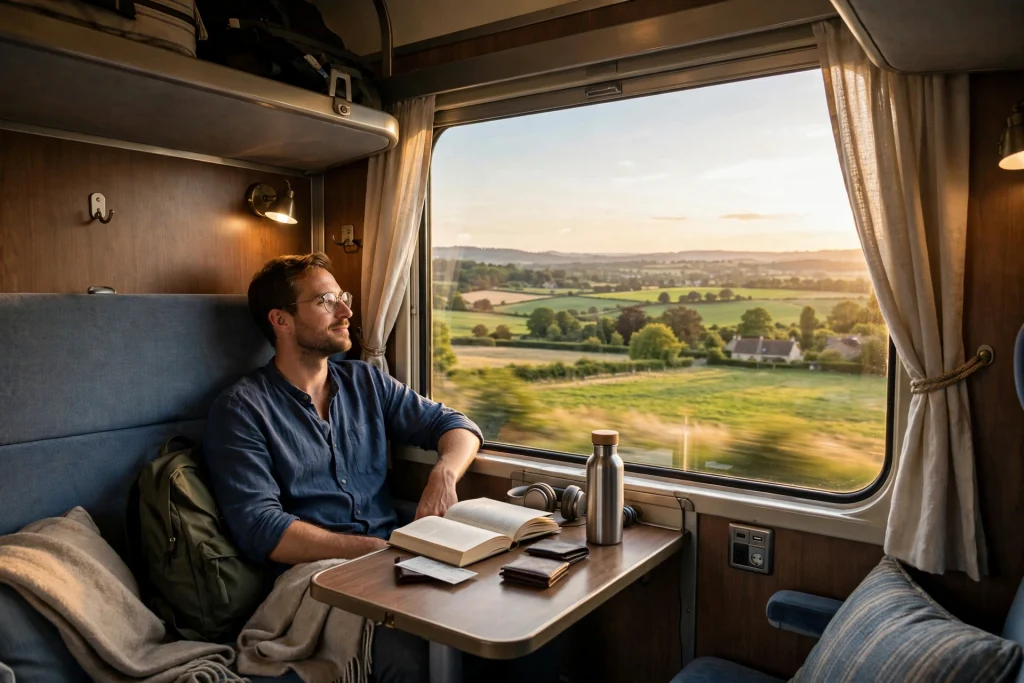
The fastest-growing trend in travel is, paradoxically, slowness. Growing numbers of travellers are rejecting whistle-stop itineraries — five cities in six days, landmarks ticked off at a sprint — in favour of longer stays in fewer places, journeys by train rather than plane, and trips built around depth rather than coverage.
Travel companies report rising demand for month-long rentals, rural retreats and rail passes, while booking data shows average trip lengths creeping upward. The movement, known as slow travel, borrows its philosophy from the slow food movement: local, unhurried and attentive. Explore more travel features on our homepage.
Why Travellers Are Slowing Down
Burnout is part of the story. After years of optimising holidays the way they optimise work, many travellers returned home needing another break. Slow travel promises the opposite: mornings without alarms, time to learn a neighbourhood’s rhythms, a café where the owner learns your order.
Remote work has made it practical. Travellers who can work from anywhere increasingly blend earning and exploring, basing themselves in one town for several weeks. Cheaper long-stay accommodation and improving rail networks in Europe and parts of Asia have removed old obstacles. Industry analysis from organisations such as the UN World Tourism Organization notes the broader shift toward longer, higher-value stays that benefit local economies more than fleeting visits.
Trains, Villages and Second Cities
Rail is the movement’s emblem. Sleeper trains that were being retired a decade ago now sell out, and new night routes are launching across Europe. Travellers describe the journey itself — landscapes unfolding, borders crossed over breakfast — as the point, not the price, of the trip.
Slow travellers also favour “second cities” and rural areas over saturated capitals. Staying longer spreads spending beyond the famous sights: village bakeries, local guides and family-run guesthouses see income that day-trippers never deliver. Tourism boards have responded with campaigns encouraging visitors to explore regions rather than hotspots, a theme covered widely by travel desks such as BBC Travel.
The Environmental Argument
Fewer, longer trips usually mean fewer flights, and slow travellers often choose trains, bicycles and walking once they arrive. That lowers the carbon footprint per day of travel substantially, even if total days away increase. Accommodation choices matter too: locally owned stays and self-catering reduce the footprint further compared with large resorts.
Critics point out that slow travel remains easier for the affluent and the remote-working professional than for families bound by school holidays and tight budgets. Defenders respond that its core practices — one base, local food, public transport — are often cheaper than the whirlwind alternative.
Travelling Less, Remembering More
Ask slow travellers what they bring home and the answers differ from the usual highlights reel: the market vendor who taught them a recipe, the trail they walked three times in different weather, the town festival they stumbled into because they were still there on Saturday.
In an age of infinite itineraries, choosing to do less — deliberately, and in one place — may be travel’s most quietly radical idea. The map is not going anywhere. The slow travellers have decided there is no prize for finishing it first.
