
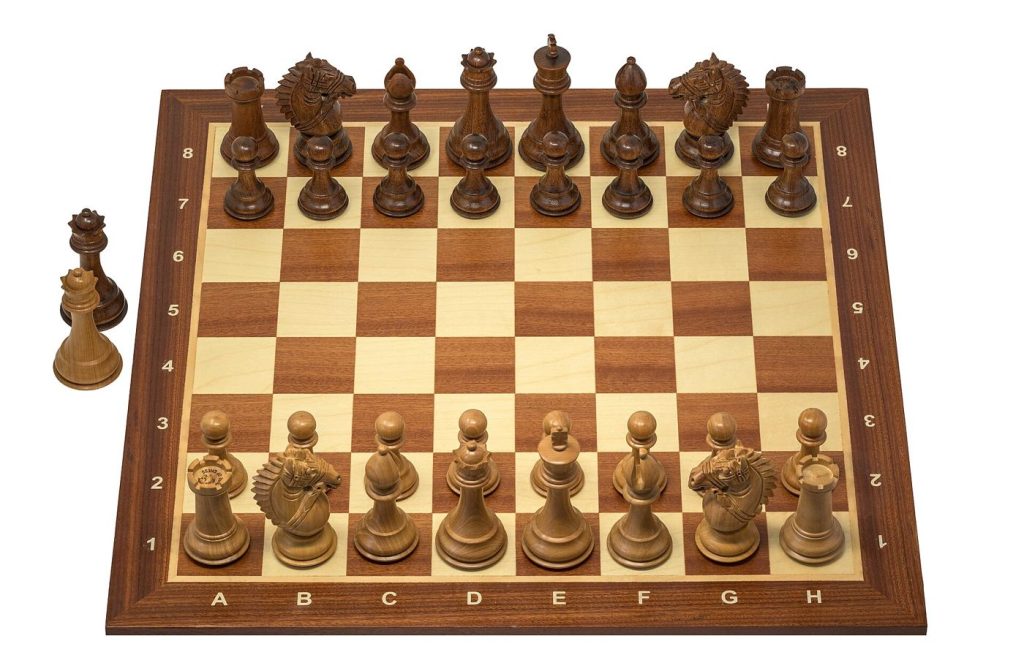
Every chess player knows the feeling: the plan you formed ten moves ago no longer fits the position on the board, but abandoning it feels like admitting the last hour was wasted. Businesses face the same moment at larger scale. The strategy that raised the money, hired the team and won the first customers stops working — and the hardest decision in leadership is recognising that the position, not the effort, is the problem.
A pivot is a hypothesis change, not a surrender
The useful definition of a pivot is narrow: keep the vision, change the mechanism. The customer problem stays the same, but the product, the channel or the buyer changes because the evidence says the original route is blocked. What a pivot is not is a lurch toward whatever is fashionable this quarter. As consultants at McKinsey & Company have noted in their work on strategic agility, the companies that change direction successfully tend to move earlier and more decisively than peers — while the facts are still arguable, not after they have become undeniable and expensive.
Signals that the position has changed
Three signals recur in almost every genuine pivot story. First, the metrics plateau despite rising effort — the team works harder for the same result. Second, customers love something adjacent to the product: a feature, a report, a side service they mention more warmly than the core offer. Third, the market starts paying for a different job than the one you are selling. Any one signal can mislead; together they form a pattern that deserves a board-level conversation, the kind we examine in our Strategy coverage.
The cost of waiting
Chess teaches the brutal arithmetic: a weakness defended for ten moves costs more than conceding it on move two. In business the equivalent is the team that spends a year protecting a declining product line because it still produces revenue, while the future of the company starves for the same people and cash. Research highlighted by Harvard Business Review on corporate longevity makes the point starkly — the average lifespan of large companies has been shrinking for decades, and the difference between the survivors and the rest is rarely the original plan. It is the willingness to revise it.
The board in front of you does not care about the plan in your head. Strategy is the discipline of playing the position as it is — and having the courage to change the plan before the position changes it for you.
There is a discipline to doing it well. The cleanest pivots are run as experiments before they are announced as strategy: a small team, a ring-fenced budget, a deadline and a success metric agreed in advance. That structure protects the core business from whiplash and protects the pivot from the deadliest internal fate — being judged by the standards of the mature business it is trying to replace. It also produces the one thing pivot debates usually lack: evidence that both sides agreed to respect before the argument started.
Founders often ask how to tell a pivot from a panic. The honest test is the customer. A pivot moves toward a problem real customers demonstrably have and will pay to solve; a panic moves toward whatever a competitor just announced. One is a response to evidence gathered over months. The other is a response to a headline read this morning. The board position can justify the first. It never justifies the second.
