
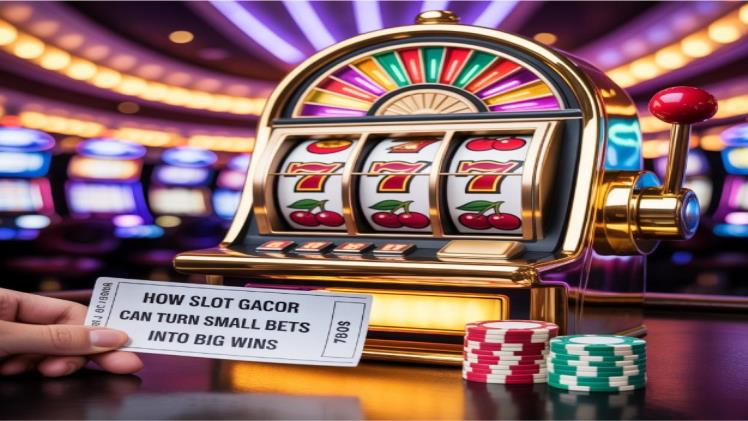
Slot games can feel mysterious, especially when a machine seems to pay in clusters that players call gacor. It’s tempting to imagine a hidden switch that decides who wins and when. In reality, licensed casinos depend on mathematics, cryptography-inspired randomness, and strict auditing to determine outcomes. Understanding how those pieces fit together explains why some sessions look hot, others look quiet, and why no back-end chooser is picking individual winners.
What gacor means versus how outcomes are created
Communities use the word gacor to describe a slot that appears lively, frequent small hits, features popping, or a big payout landing after a short wait. That label is about perception, not a special operating mode. On a compliant slot, every spin is produced by a random process that does not remember the previous spin. If a game feels hot, it is the natural clustering you get from randomness, not a setting that elevates your odds on demand.
The core engine: pseudorandom number generators
Modern slot gacor rely on a pseudorandom number generator (PRNG) that runs continuously. At the instant you press spin, the program samples one or more numbers from the PRNG’s current state. Those numbers are then mapped to reel stops, bonus triggers, and other outcomes. The PRNG itself is designed so that its sequence is computationally unpredictable for practical purposes. Regulators require that the generator and its implementation pass statistical tests and third-party certification before a game goes live.
From numbers to symbols: outcome mapping
The PRNG does not spit out win or lose. It returns integers or floating-point values that are transformed into reel positions. Each virtual reel contains a table of symbols, some frequent, some rare. The mapping step converts the random value into a stop index on each reel, which then determines the visible line result. Because rare symbols occupy fewer positions on the virtual reel, the probability of landing them is lower, which is how the game balances ordinary hits against occasional big ones.
Return to player and volatility as design choices
Two dials shape the long-term feel of a slot: RTP and volatility. RTP describes the average proportion of wagers the game pays back across a very large number of spins. Volatility controls the texture of that payback: low or medium volatility spreads value into more frequent small wins, while high volatility withholds value for rarer but larger hits. Designers tune reel tables, paytables, and bonus frequencies to match the intended RTP and volatility profile, and auditors verify that the math model produces those targets within accepted tolerances.
Why streaks and clusters happen naturally
Random processes generate runs. Just as coin flips can produce surprisingly long sequences of heads, a fair slot can produce concentrated bursts of wins or long quiet patches. Players experience the bursts as gacor, but the underlying math never changed. Human pattern detection is powerful, so our brains attribute meaning to streaks that are expected in randomness. The key insight is that independence does not mean alternation independence allows clustering.
Bonus features and scheduled probabilities
Many modern slots funnel a large share of potential value into features: free spins, multipliers, expanding or sticky wilds, hold-and-spin rounds, or tumble mechanics. Each feature has a mathematically defined trigger rate and payout distribution. The PRNG determines feature entry in the same way it determines line hits by mapping random values to trigger thresholds. If a session happens to roll several triggers inside a short window, the game looks and feels gacor, even though the probabilities remain constant.
Progressive jackpots and network randomness
Progressive jackpots aggregate tiny contributions from many players across a network. A separate random draw, often independent of the reel outcome, determines when a jackpot fires. The trigger can be purely random with a target average rate or weighted by bet size according to the published rules. Because contributions come from a large pool of wagers, the moment a jackpot hits can appear uncanny to anyone observing only a single machine.
What algorithms do not do on regulated games
There is no compliant mechanism that decides to pay a particular player because they are due, because they changed bet size, or because it is a certain time of day. Regulations prohibit outcome steering based on player identity, deposit history, or session losses. Operators can personalize offers, set deposit limits, or require responsible-play checks, but the spin result itself must remain independent and random. Any system that adapted the PRNG to nudge losses or wins would fail certification.
Platform algorithms you might notice
Casinos do run algorithms that are unrelated to determining wins. Recommendation systems surface new titles based on your past play. Risk engines review withdrawals for anti-fraud and KYC compliance. Bonus systems track wagering progress. None of these tools can adjust the math of a certified game. They influence your experience around the slot, not the probability of a specific outcome on the reels.
Why some titles feel more alive than others
Two games with the same RTP can feel dramatically different. A title that concentrates value in bonuses will seem quiet between features and explosive inside them. Another that sprinkles small base-game hits will feel warm and chatty even if top-end wins are rarer. Sound design, near-miss animations, and tease mechanics amplify those sensations. Players label the first kind gacor when several features land close together label the second kind gacor when the steady drips line up with short-term luck.
Practical takeaways players can actually use
You cannot force a slot to become gacor, but you can pick environments where your experience is more likely to feel rewarding. Choosing higher-RTP titles improves long-run expectations. Matching volatility to your budget preserves session length so you see the features that carry real value. Using fair promotions and setting pre-defined stop points protects profits and limits downside. Observing a game’s rhythm in demo or at minimum stakes helps you decide whether its pacing suits your temperament before you commit.
A clear answer to the title question
Casino algorithms do not choose slot gacor winners. Certified games choose outcomes through continuous random sampling, then map those values to reel stops and features according to a fixed math model. What players call gacor is the visible face of randomness doing exactly what it is expected to do, sometimes quiet, sometimes clustered, occasionally spectacular. When you understand that framework, the mystery fades and the strategy becomes simple: select sound games, play within a plan, and let the math deliver its natural bursts without chasing illusions.
